
They thought the person hired to finish the operation would disappear with the secret. Instead, he became the witness.
Emperor, someone made a grave mistake.
Not simply a bad decision.
A decision whose consequences were supposed to be buried with the intended result.
The people involved believed they had created enough distance between themselves and the final act. One person planned. Another provided access. Someone else stood to receive the money. The recruited actor was supposed to complete the assignment and carry the darkest part of the operation away with him.
But the expected result never arrived.
Now the person who was supposed to silence the case may be the person capable of opening it.
What they thought was buried has resurfaced
Someone inside this case already sees the mistake.
He is quiet.
He has not announced everything he knows because he is still observing the people involved, separating what he senses from what the evidence can establish.
That silence is not blindness.
It is investigative patience.
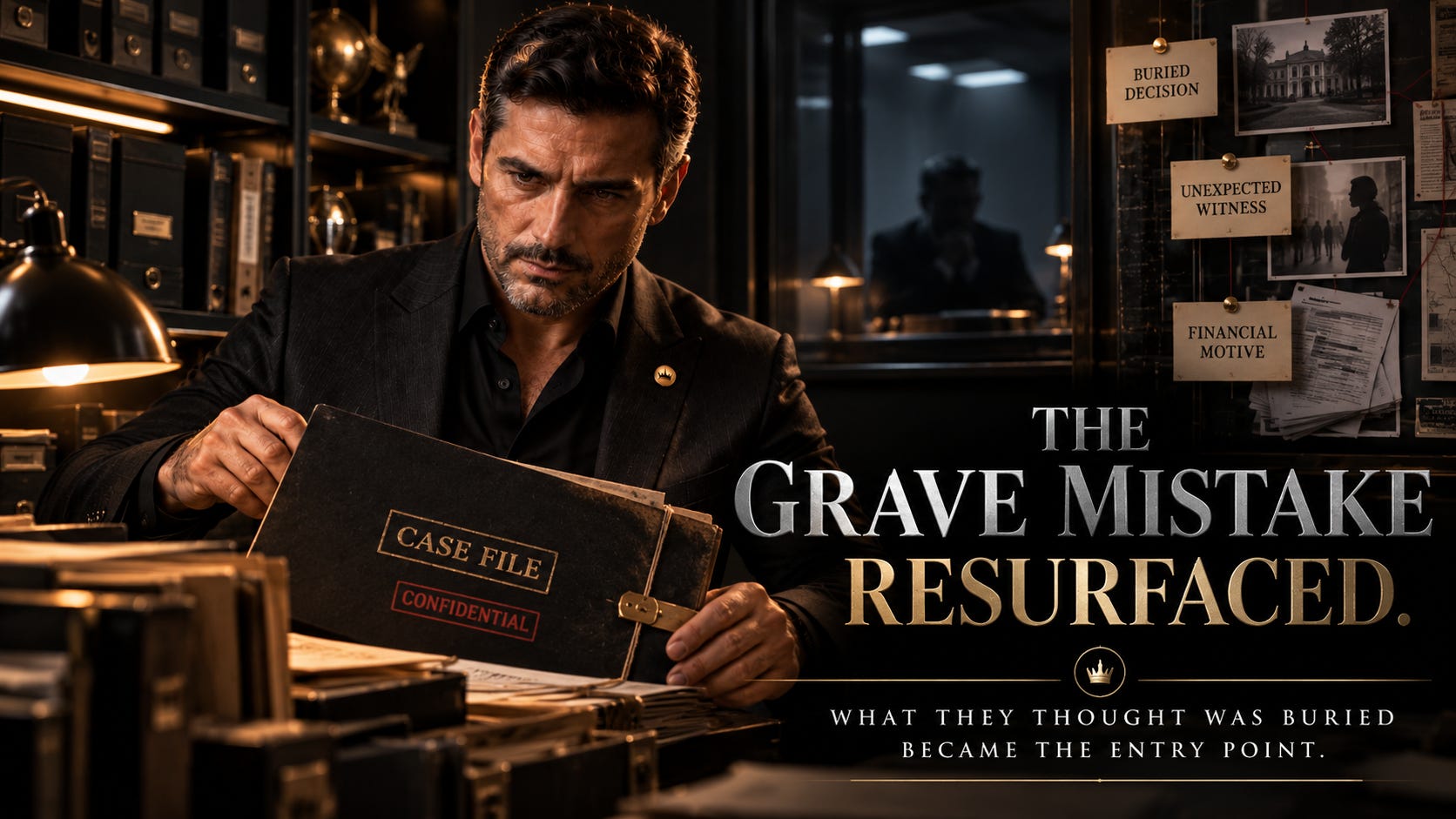
The reading points toward three connected elements:
A concealed decision
A financial motive
An unexpected witness
The darkness of the message should not tempt the investigator into beginning with the darkest accusation.
Begin with the decision everyone expected to remain hidden.
Who made it?
When was it made?
What financial result depended upon it?
Who discovered that the expected result had failed?
The grave mistake was not only moving forward with the plan.
It was believing every participant would remain loyal after the plan collapsed.
The story indicates a staged loss
The channel presents a possible structure involving intimate access, a concealed legal arrangement, an insurance instrument and an incident intended to appear accidental.
That is an investigative theory—not an established fact.
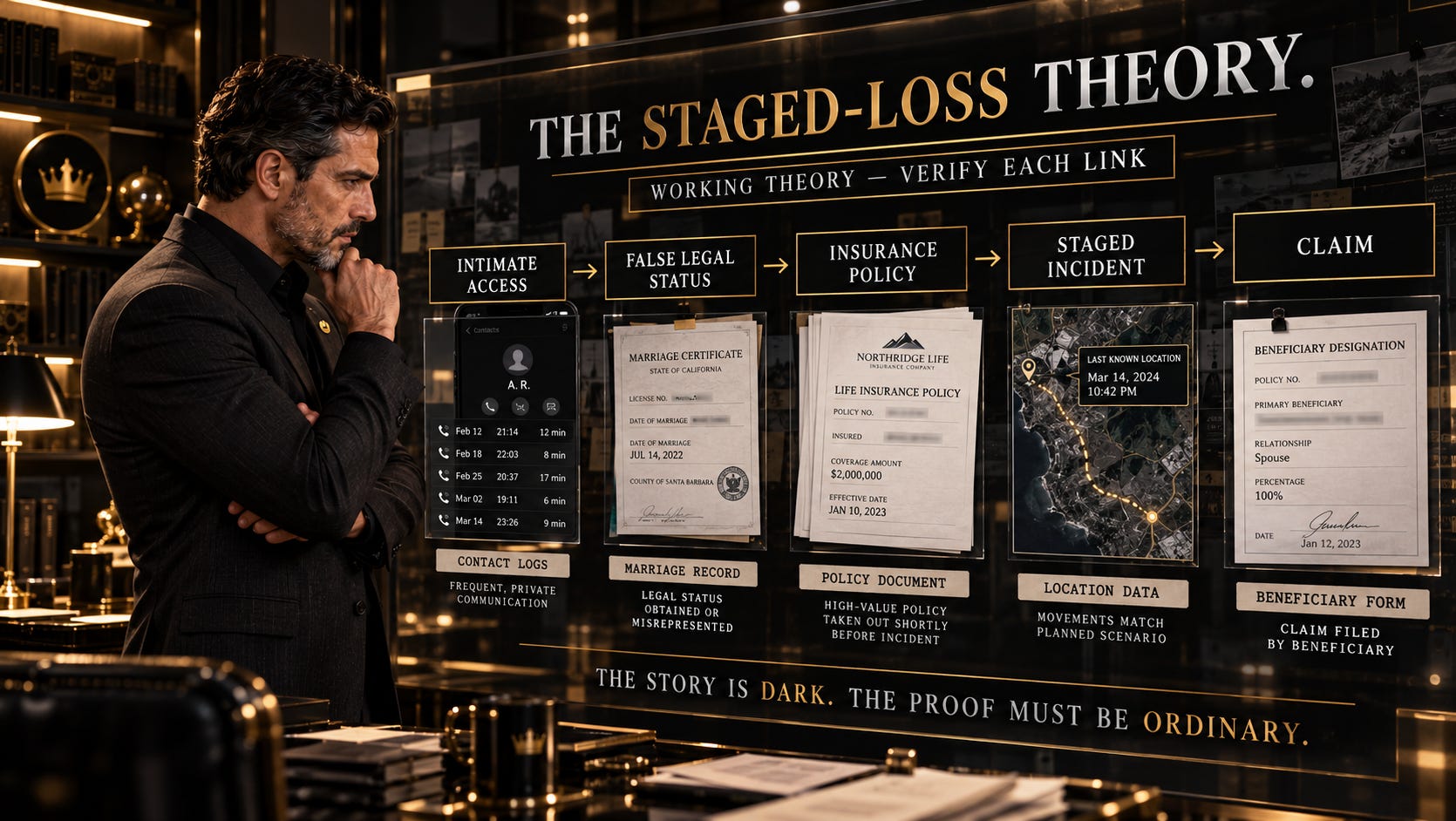
The working sequence is:
Intimate Access → False Legal Status → Insurance Policy → Staged Incident → Claim
If that sequence is real, every link should produce an ordinary record.
Intimate access creates communications, photographs, location data and witnesses.
A legal status creates applications, signatures, dates, addresses and government records.
A policy creates underwriting information, beneficiary designations, payment histories and effective dates.
A staged incident creates preparation, movement, contact and inconsistencies.
A claim creates forms, statements, representatives and a person expecting to be paid.
The story is dark.
The proof must be ordinary.
The person hired to complete it changed sides
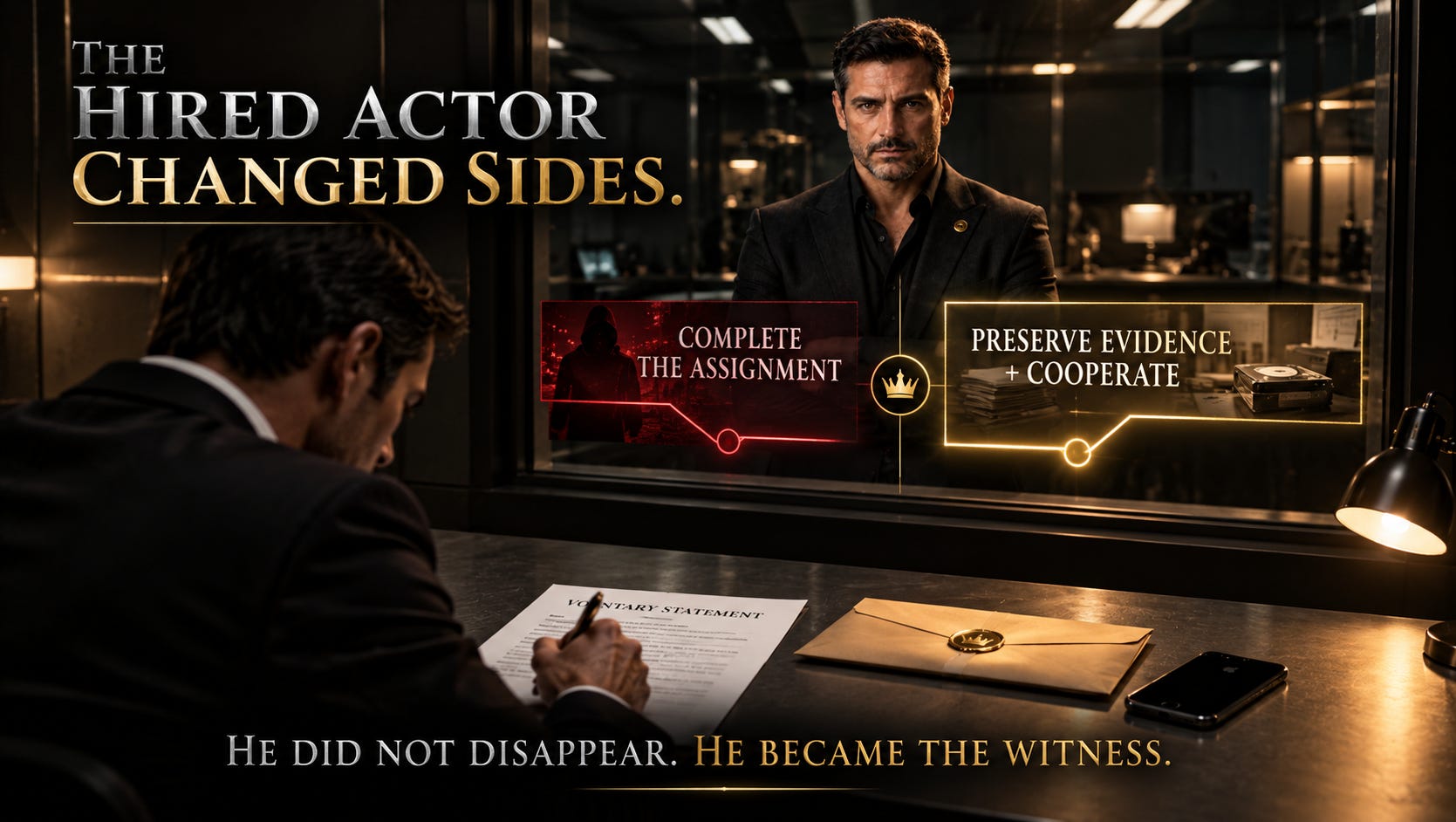
The decisive reversal in this reading is not that the actor vanished.
It is that he stopped cooperating with the original purpose.
The channel suggests he may have moved far enough into the operation to possess direct knowledge, but refused—or failed—to deliver its intended conclusion.
That distinction matters.
Someone who heard about a plan is a source.
Someone who accepted money, communicated with the participants, moved toward the act and then withdrew may possess evidence from inside its construction.
He may still face consequences for whatever he agreed to or attempted. Cooperation does not erase conduct.
But an incomplete operation creates an opening:
The intended target remains available to testify.
The recruited actor can describe how he was approached.
The payment can potentially be traced.
Devices may still contain communications.
The final instructions can be compared with the physical timeline.
The people who expected the result may reveal themselves through their reaction to its failure.
The person hired to finish it may now be the only participant whose survival depends upon telling the truth before the others align their stories.
© 2026 Claudia Quiana. All rights reserved.
This teaching, decode, written framework, original terminology, charts, visual instruments, and arrangement are proprietary materials of Claudia Quiana and Basira Intuition TV.
No part may be copied, reproduced, republished, distributed, recorded, adapted, taught, or used commercially without prior written permission. Paid access is licensed solely for the subscriber’s personal use and does not authorize redistribution or republication.
Brief quotations may be used with clear attribution and a direct link to the original publication.


